To create a new PC with a small chassis for space-saving benefits or just to upgrade the style and feel of your existing machine. We have simplified your choices for the best smallest ATX cases that are minute, light, and can accommodate standard PC components, including ATX motherboards, power supplies, liquid coolers, and full-length GPUs. We’ve researched and updated our list of compact PC cases for the ATX form factor that are presently being preferred by gamers and enthusiasts with an emphasis on the newest trends, mobility, beauty, and outstanding airflow for top performance.
| Award | Design | Retailer | |
|---|---|---|---|
| The Best Smallest ATX Case | Best Pick 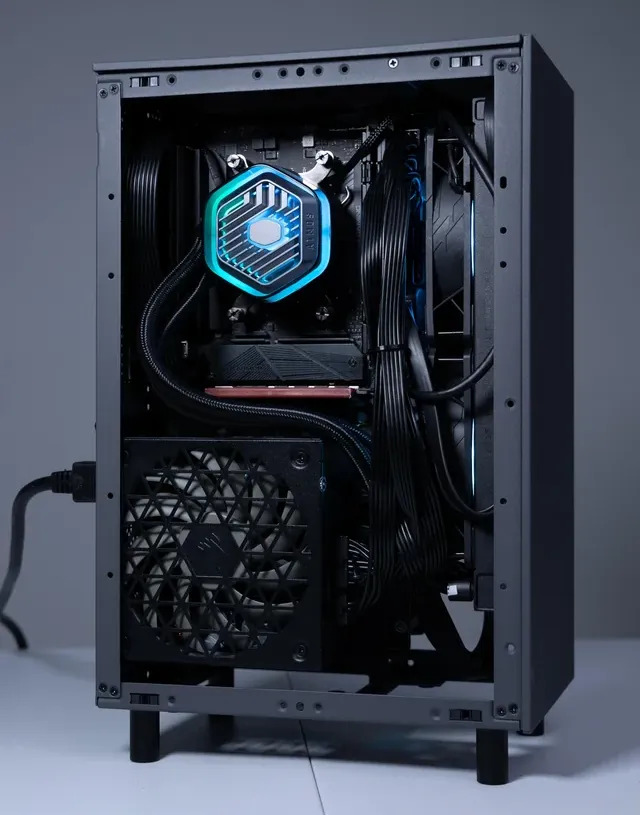 | CHECK LATEST PRICE | |
| Best Small ATX Case | Staff Pick 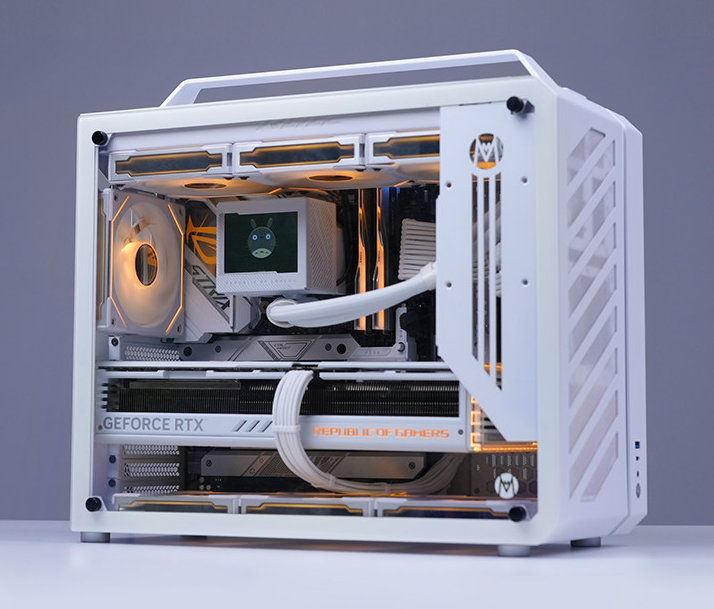 | CHECK LATEST PRICE | |
| Smallest Cube ATX case |  | CHECK LATEST PRICE | |
| Smallest Modular ATX case |  | CHECK LATEST PRICE | |
| Smallest and Lightest Box ATX Case | 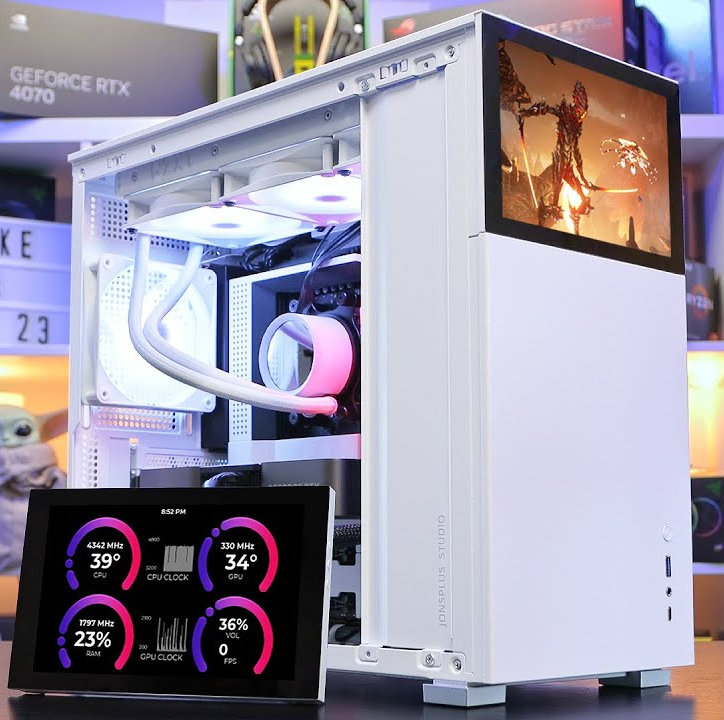 | CHECK LATEST PRICE | |
| Smallest Mid Tower Case for ATX Motherboard | Budget Pick 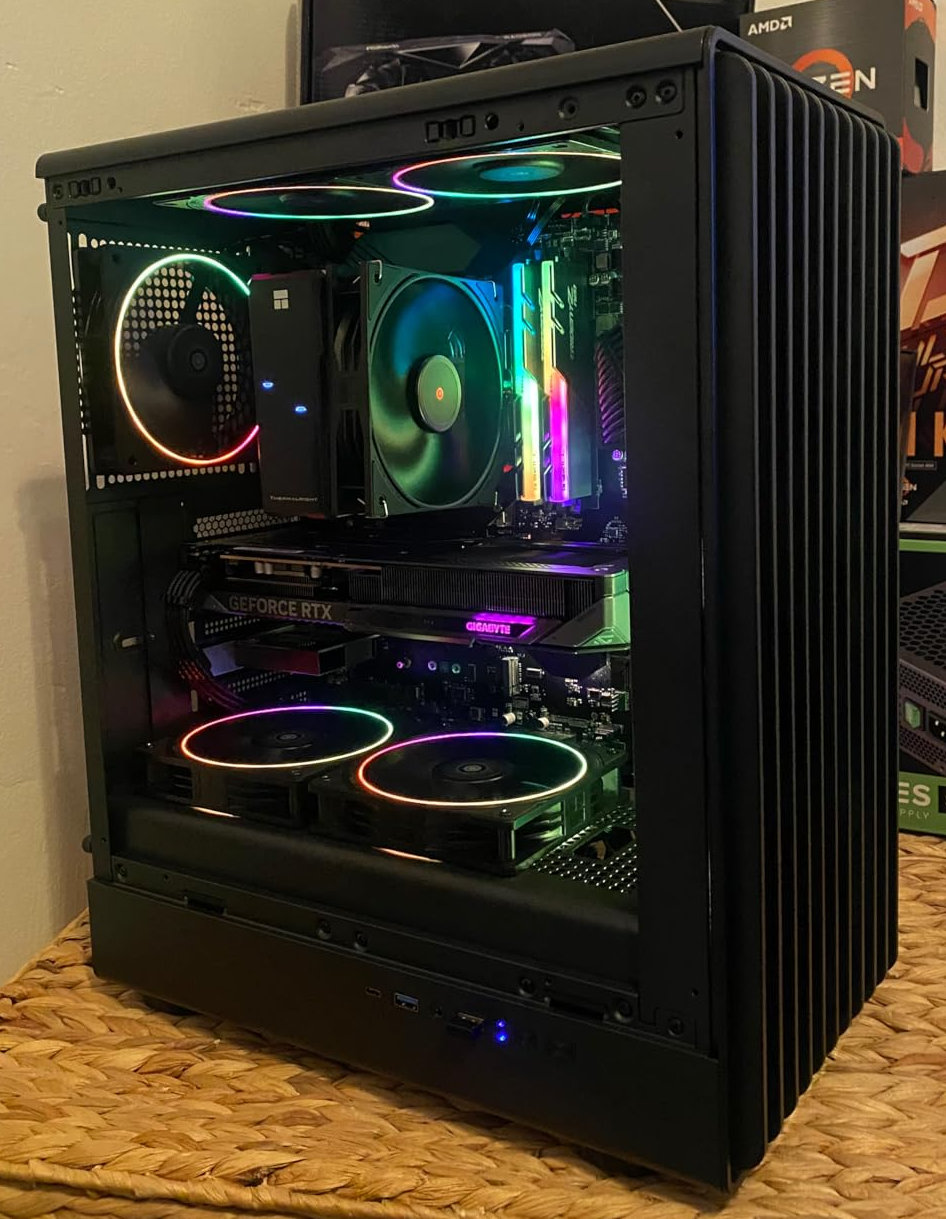 | CHECK LATEST PRICE | |
| Best Looking ATX Cube Chassis |  | CHECK LATEST PRICE | |
| Smallest full ATX Case |  | CHECK LATEST PRICE | |
| Best Compact ATX case | 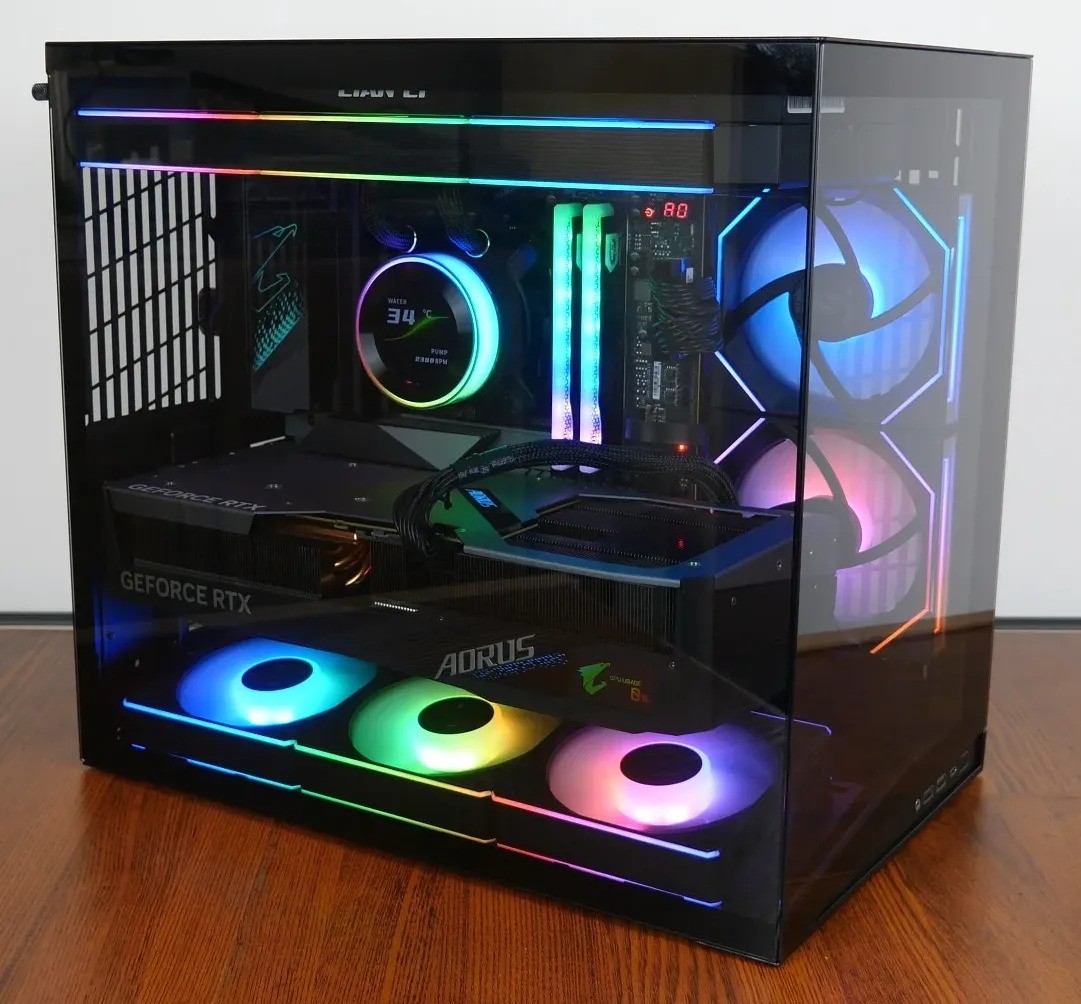 | CHECK LATEST PRICE | |
| Small Full Tower Case | 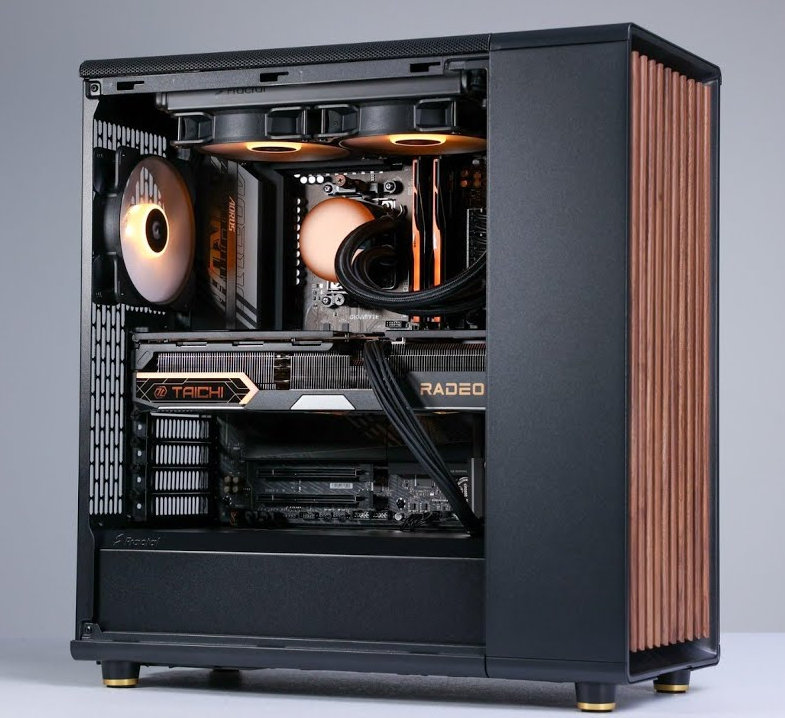 | CHECK LATEST PRICE |
When developing a portable PC using compact ATX cases, there are a few limitations. The timid dimensions might necessitate the adoption of an inverted motherboard position, and limited space could make integrating a twin radiator water cooling loop challenging. Also, limited drive bays and tight cable management are other common occurrences to feel restricted. Still, you can construct a fantastic, smaller ATX desktop PC with elegant RGB lighting and an RTX GPU.
Top 3 Smallest ATX Cases
This list focuses on the smallest ATX enclosures that are space-efficient and compatible with ATX motherboards. If your goals are different and you want to build a more compact computer, we recommend looking through our listing of the smallest MATX PC cases. And, if you want to create an even smaller PC, check out our roundup of the best portable PC cases to build the tiniest PC possible.
10 Popular Smallest ATX Cases
SSUPD Meshroom S (14.93 Liters)
The Best Smallest ATX Case
SPECIFICATIONS
Measurements: 15.2 x 9.1 x 15 inches | Radiator Support: 240mm | GPU Length: 360mm | Included Fans: (3) 2x, 140mm, 1x 120mm | Weights: 3.83 Kilograms |
The SSUPD Meshroom S is a rare case that manages to squeeze a full ATX motherboard into a footprint just under 15 liters. It takes the form of a slim, vertical tower wrapped entirely in fine mesh, which helps solve the airflow problems that usually plague compact builds. For builders who want to keep a full-size board but hate the bulk of a traditional mid-tower, this case feels like a breakthrough. It stands neatly on a desk, taking up very little space while subtly showing off the hardware behind the mesh panels.
Building inside the Meshroom S does require planning. You will need an SFX power supply to make an ATX board workable, and a longer PCIe riser cable, typically around 270 to 300mm, to reach the top expansion slot. Once those requirements are met, the layout becomes surprisingly flexible. The adjustable internal spine lets you prioritize GPU space, even accommodating very thick graphics cards, so you are not forced to downgrade performance just to go small.
There are trade-offs to fitting ATX hardware in a case this compact. Front radiator space is limited, port access can require careful positioning, and some builds may need optional brackets to keep everything usable. Still, the payoff is significant. You retain the advantages of a high-end ATX board, like extra expansion and stronger power delivery, without a heavy steel box dominating your workspace. Compared to something like a Corsair 4000D, the Meshroom S feels far more efficient and intentional. It is a dense, premium enclosure that rewards careful planning and gives you a powerful system in a remarkably small footprint.
For space saving, check dedicated Horizontal PC cases.
Mechanic Master C34 Pro (30.7 Liters)
Best Small ATX Case
SPECIFICATIONS
Measurements: 16.54 x 10.61 x 14.96 inches | Radiator Support: 240mm | GPU Length: 300mm (11.8 inches) | Included Fans: None | Weights: 10.9 Kilograms |
The Mechanic Master C34 Pro is built for people who want a full-power ATX system without a giant box taking over the desk. At around 30 liters, it is much smaller than a typical mid-tower, yet it feels solid and purposeful thanks to its thick aluminum exterior and steel internal frame. You are not forced into smaller motherboards just to save space, as it comfortably supports ATX and even E-ATX boards. The built-in handle may seem minor, but it gives the case a practical, almost tool-like character that fits its no-nonsense design.
The internal layout makes smart use of every inch. Unlike many compact cases that limit cooling options, the C34 Pro supports large 165mm air coolers or a 360mm radiator up top, so high-wattage CPUs are not an issue. There is also room for full-length GPUs up to 420mm, which means you can run top-tier graphics cards without compromise. Airflow is handled through well-placed mesh panels that keep heat moving out without relying on excessive fan noise.
Where this case really earns its price is in the details. Cable management space behind the motherboard tray is actually usable, not just theoretical, and the panels fit together cleanly with no flex or rattling. Everything feels tight and deliberate. The C34 Pro is a compact, well-built home for a serious workstation or gaming rig, offering the power of a full-size system while freeing up valuable desk space. For builders who want strength, balance, and efficiency in one enclosure, it gets the job done without trying to show off.
For custom loop configuration, we recommend the best PC cases for watercooling.
Cooler Master Qube 500 (33.4 Liters)
Smallest Cube ATX case
SPECIFICATIONS
Measurements: 15.55 x 8.27 x 17.72 inches | Radiator Support: 360mm at front | GPU Length: 300mm | Included Fans: (3), All Inline at the front with ARGB | Weights: 6.4 Kilograms |
Arriving as a flat-pack is the first thing you notice with the Cooler Master Qube 500, and it instantly separates it from most pre-assembled cases. Rather than feeling like extra work, the hands-on assembly gives you a clear understanding of the chassis and how everything fits together. At just over 33 liters, it is impressively compact for a case that supports a full ATX motherboard and a standard ATX power supply. The perforated steel panels feel solid and well-made, avoiding the flimsy, plastic-heavy feel that is common at this size and price.
The internal layout is where the Qube 500 really makes sense. By moving the power supply to the front, Cooler Master reduces wasted vertical space and keeps the case shorter than most ATX designs. There is still plenty of room for a large graphics card. Airflow comes naturally thanks to the dense perforation on every side, which also works as a functional mounting grid for simple 3D-printed accessories. Every panel can be removed, flipped, or rearranged, and the case can be built in a mirrored layout to suit different desk setups. The result is a compact, flexible case that respects your space while letting you use standard hardware without compromise.
Cooler Master MasterBox Q500L (34 Liters)
Smallest Modular ATX case
SPECIFICATIONS
Measurements: 17.95 x 11.22 x 18.19 inches | Radiator Support: 360mm | GPU Length: 375mm | Included Fans: (3), All 120mm with 1300 RPM | Weights: 9.6 Kilograms |
Cooler Master’s MasterBox Q500L earned its reputation by showing that a full ATX motherboard could fit into a chassis sized more like a compact Micro ATX build. It was one of the early cases that challenged the idea that ATX always needed a large, traditional tower. At 34 liters, it remains incredibly compact, and its party trick is that it doesn’t care which way you orient it. You can stand it up like a regular tower, but it really shines when you lay it flat on its side as a horizontal desktop. The rubber-capped thumbscrews on the side panel double as feet, making it a great solution for hiding a powerful PC inside a TV stand or a tight shelf where a tall case just won’t fit.
The design is straightforward and prioritizes utility over flash. By moving the power supply to the front, Cooler Master cut down on the height and depth, which solves the common headache of having a massive black box eating up your desk space. The entire shell is covered in a perforated pattern that lets you mount fans or the moveable I/O panel almost anywhere you want. While it is an older model, its modular nature means it still works well for modern mid-range parts that need constant airflow. It is a solid, no-nonsense choice for anyone who wants a small footprint without having to buy expensive, niche components to make the build happen.
JONSBO D41 (35.4 Liters)
Smallest and Lightest Box ATX Case
SPECIFICATIONS
Measurements: 13.82 x 7.87 x 15.35 inches | Radiator Support: 240mm liquid cooling radiator | GPU Length: 275mm at max | Included Fans: (1), 120mm fan in the rear, RGB | Weights: 3.5 Kilograms |
With its shoebox-style layout, the Jonsbo D41 is a pleasant surprise for builders who want to squeeze every bit of space out of a compact ATX rig. It makes it possible to enjoy the clean, mesh-heavy look popularized by cases like the ASUS AP201 while still using a full-sized ATX motherboard you already own. At 35.4 liters, it is only a tiny bit taller than its famous micro-ATX rival, yet it opens up a world of compatibility that usually requires a much bulkier tower. It is a dense, well-thought-out chassis that lets you keep your high-end board and large power supply without feeling like you are wasting any space on your desk.
What makes this case a modern killer is how it handles a massive GPU alongside a standard build. By moving the power supply to a bracket at the front, Jonsbo cleared enough room to fit even a long RTX 4090 or the newer 50-series cards without them hitting the front panel. You can even slide that power supply bracket up or down to find the perfect balance between top radiator clearance and graphics card length. It solves that classic builder’s headache where you have to choose between a small footprint and top-tier cooling, as it still fits a full 360mm liquid cooler right in the roof.
The build quality is another area where it hits well above its weight class. The steel panels have a sturdy, premium feel, and the mesh is fine enough to act as a filter while letting your fans pull in plenty of air from the bottom and top. It is a solid, metal-heavy case that manages to look professional and understated while housing a powerhouse of a system. If you are looking for that small form factor vibe but refuse to give up your ATX motherboard, the D41 is a total bargain that proves you don’t need a giant box to run a serious gaming rig.
For a quieter and more modest PC, choose from the best minimalist PC cases.
FOIFKIN K6 (36.6 Liters)
Smallest Mid Tower Case for ATX Motherboard
SPECIFICATIONS
Measurements: 16.46 x 8.27 x 17.72 inches | Radiator Support: 360mm | GPU Length: 330mm at max | Included Fans: (1), 120mm RGB fan | Weights: 6.1 Kilograms |
Building your setup around a case like the FOIFKIN K6 is an interesting move if you want to skip the high cost of big-name brands while still getting a compact footprint. It avoids the massive bulk of a standard tower by shaving down the depth, sitting at about 36 liters, which is a sweet spot for fitting a full ATX motherboard without taking up the whole desk. The real draw here is that it arrives with six pre-installed fans, three 140mm and three 120mm, which is a huge relief because you won’t have to spend an extra fifty bucks just to get the air moving through your build.
The snap-on glass panel is a welcome touch that solves the annoying struggle of fumbling with tiny thumbscrews every time you want to clean a filter or swap a part. Inside, there is surprisingly good clearance for tall CPU air coolers, so you can keep your existing gear without checking every single millimeter. While the metal feels a bit lighter than a premium boutique case, the vertical grille design gives it a clean, professional look that fits into a modern home office. It is a practical, straightforward solution for someone who wants to shrink their setup while keeping the convenience of standard, full-sized components.
To hide your build check our modern sleeper PC cases.
Corsair iCUE 220T (37.3 Liters)
Best Looking ATX Cube Chassis
SPECIFICATIONS
Measurements: 17.72 x 8.74 x 18.39 inches | Radiator Support: 430mm at max | GPU Length: 330mm at max | Included Fans: (2 Fans), 180mm large RGB fans in the front | Weights: 9.7 Kilograms |
Going with the iCUE 220T makes sense when the goal is a clean, polished build without committing to a traditional tower. Standing at just 37.3 liters, it is noticeably smaller than most mid-towers, yet it still fits a full-sized ATX motherboard and comfortable components. The steel front grille is functional, not decorative, letting the three included RGB fans pull in plenty of fresh air and keep both the GPU and motherboard cool, which helps avoid the heat buildup common in more closed-off compact cases.
The real benefit here is the sheer value and ease of use you get right out of the box. Since it comes pre-wired with a Lighting Node CORE, you can control all your fans through a single USB header, which keeps the cable mess to a minimum in such a tight frame. You do have to be a bit mindful of your graphics card length, as it tops out at 300mm with the front fans installed, but for most mid-range and even some high-end cards, it fits just right. It is a solid, well-built solution that feels premium and heavy, making it one of the smallest ATX case options that don’t compromise on style.
For a personal NAS, you can see the review of mini ITX NAS cases.
Fractal Meshify 2 Compact (40 Liters)
Smallest full ATX Case
SPECIFICATIONS
Measurements: 17.83 x 9.06 x 18.35 inches | Radiator Support: 360mm | GPU Length: 360mm | Included Fans: (2), 120mm fans without RGB | Weights: 7.8 Kilograms |
When you decide to go with an ATX motherboard but want to keep your desk from looking like a server room, the Fractal Meshify 2 Compact is usually the first place I point people. At just under 40 liters, it manages to trim the fat without making you regret your life choices during the build process. Most small cases force you to plan every cable route like a game of chess, but this one has a top panel that pops off completely. This means you can plug in those stubborn CPU power cables or reach tight fan headers without scraping your knuckles against the roof.
The cooling performance is where this case really earns its keep. That signature geometric mesh on the front isn’t just for show; it lets the two 140mm intake fans pull in a massive amount of fresh air. Even with a power-hungry GPU inside, the internal temperatures stay remarkably low because the air has a straight path from front to back. It solves the common headache of “compact” cases becoming little ovens once you close the side panel. You get the thermal headroom of a much larger tower while saving a significant amount of desk space.
One thing to keep in mind is that the shorter depth means you need to double-check your parts. If you are using a thick front-mounted radiator, it might bump into longer three-fan graphics cards. However, if you stick with a standard air cooler or a top-mounted 240mm AIO, everything fits comfortably. It feels like a case designed by people who actually build PCs for fun. It is clean, stays quiet, and keeps your hardware cool enough that you never have to worry about thermal throttling during a long session.
With a rigid frame, secure your servers with the best rackmountable PC cases.
O11D MINI V2 Flow (43 Liters)
Best Compact ATX case
SPECIFICATIONS
Measurements: 17.83 x 9.06 x 18.35 inches | Radiator Support: 360mm | GPU Length: 360mm | Included Fans: (2), 2x 140 mm Dynamic X2 fans, non-RGB | Weights: 9.0 Kilograms |
Assembling the O11D Mini V2 Flow feels like someone finally shrank the flagship showpiece without losing the soul of the design. It captures that exact premium look of the larger Dynamic EVO, giving you those clean panoramic glass views that make your hardware look like it belongs in a gallery. Even though it sits at 43 liters, it holds that same wide, planted stance on your desk that people love about the bigger models. It solves the space issue for anyone who wants a “fish tank” aesthetic but doesn’t have the room for a massive full tower.
The real magic here is how it handles heat despite all that glass. By adding the mesh panels in the right spots, it stops being a greenhouse and actually lets your components breathe. You get that high-end dual-chamber layout where the messy cables and power supply are tucked away in the back, leaving the main cabin looking spotless. It is the perfect middle ground for a builder who wants the sophisticated style of a heavy-duty Lian Li rig but wants it in a package that fits comfortably on a standard-sized desk.
Fractal North (44.5 Liters)
Small Full Tower Case
SPECIFICATIONS
Measurements: 17.9 x 7.87 x 18.3 inches | Radiator Support: 360mm at max | GPU Length: 400mm clearance | Included Fans: (2), 180mm large RGB fans in front | Weights: 6.5 Kilograms |
Fractal North stands out as a compact yet capable ATX case that doesn’t compromise on usability. At 44.5 liters, it remains one of the smallest cases that can comfortably house a full-sized ATX motherboard along with standard graphics cards and power supplies. The walnut or oak slats on the front give it a refined look, but they don’t get in the way of airflow, and the open front panel allows intake fans to move air efficiently across key components. It’s straightforward to build in, with enough space to route cables cleanly and install storage without contortions, making it a practical choice for a compact, powerful system.
For cooling, the North handles standard air setups well. You can mount multiple fans in the front and top, and temperatures stay reasonable even under load, without needing extra fancy features. The design is sturdy, and the layout is logical, so you can fit all necessary components without fighting for space. It’s a great option for anyone wanting a small footprint while still running a full ATX board with modern hardware.
If you need more clearance for large air coolers or custom water loops, alternatives like Fractal Torrent Compact or Lian Li Lancool 207 provide extra room while staying within a relatively compact footprint. Still, for a case that blends neatly into a home or office setup while supporting a full-sized motherboard, the Fractal North is one of the best-balanced choices on the market.
Buying Guide for Smallest ATX Cases
Is ATX case good for gaming?
ATX is defined as the Advanced Technology Extended. It’s a specification for computer motherboards and power supplies. ATX motherboards are the most common size for desktop computers and a great option for modern gaming PCs. Many high-end ATX motherboards include outstanding features like adjustable RGB lighting, multiple expansion slots for multiple graphics cards, overclocking CPU support, and quad-channel high-speed memory compatibility. In this regard, compatible ATX PC cases are appropriate for high-end workstations and enthusiast-level gaming setups since they are less bulky than Extended-ATX (EATX) cases and have more capacity for standard components than MATX chassis.
Will a micro ATX fit in an ATX case?
Yes, the smaller form factor of a micro-ATX motherboard makes it compatible with a standard ATX case. This allows for benefits such as improved airflow, additional drive bays, and more space for upgrades, such as a larger GPU or water-cooling radiator. Micro-ATX motherboards have dimensions of 9.6 inches x 9.6 inches, as compared to the 12 inches x 9.6 inches of a standard ATX motherboard. This means that even the smallest ATX cases can accommodate an M-ATX motherboard without any issues of incompatibility.
Pros and Cons of Smallest ATX Cases
What are the four main ATX sizes?
Mini-ITX, Micro-ATX, ATX, and E-ATX are the four common ATX sizes. The Mini-ITX motherboard form factor is the smallest, often measuring 6.7 inches by 6.7 inches. The Micro-ATX form factor is significantly bigger, measuring 9.6 inches by 9.6 inches. The usual form factor is ATX, which is 12 inches by 9.6 inches. The E-ATX form factor is the biggest, measuring up to 12 inches by 13 inches. Each form factor has its own set of capabilities and expandability choices, with Mini-ITX being the most compact and E-ATX having the most expansion options.
Which ATX is the smallest?
The mid-tower ATX case is the smaller of the two popular varieties of ATX cases, which are full-tower and mid-tower. Mid-tower ATX cases are normally 17-18 inches tall, 7-8 inches wide, and 15-16 inches deep, but full-tower cases are bigger and have dimensions of 22-24 inches tall, 8-9 inches wide, and 20-22 inches deep. This indicates that full-tower cases are larger than mid-tower cases.
Does ATX size matter for PC casing?
It is important to consider the size of the case when choosing a PC casing, as it can affect the compatibility of the components and the overall functionality of the build. The ATX form factor is available in a variety of sizes, including EATX, standard ATX, mATX, and mITX, with each size offering different dimensions and capabilities for a compatible motherboard form factor. The EATX case size is the largest when compared to regular ATX, the MATX is smaller than ATX, and ITX has the most miniature factor of all.
Small ATX Cases Vs Full Tower PC Cases
Conclusion
Opposing the bulky rigs, you can choose the best smallest ATX cases from the above selection to be able to build a manageable gaming PC in a low profile. The appealing ‘Compact Mid Towers’ stems from their ability to fit into any space. You may squeeze powerful GPUs and robust cooling systems into compact, durable chassis to build a small rig that looks not only fancy, interesting, and attractive with full panoramic glass fronts, but you can also obtain the best airflow with modern looks at the same time.

Founder
Hi, I'm Adam Payne, a tech enthusiast and PC guru. I love evaluating the latest gadgets and sharing my honest reviews of hardware improvements and experiences with modern PCs from handheld to desktops. Whether you're looking to build a new workstation rig or just want some guidance on the best components to choose, I'm here to help. Join me on my journey as I explore the world of technology and all the amazing gadgets it has to offer.